
A Journey into Wind Energy and Wind Farm Optimisation
My journey into wind energy did not begin directly in the field, but it was never too far away. During my undergraduate studies, I majored in Energy and Power Engineering, where I built a solid foundation in mechanics and fluid dynamics, while also gaining extensive knowledge of hydraulic turbines.
To be honest, however, I had always been deeply fascinated by aerodynamics. Like many boys, I was naturally drawn to racing cars, aircraft, and anything shaped by the interaction between flow and motion. Therefore, when it came time to choose the topic of my bachelor’s thesis, I began to think from a different perspective: since wind turbines are also rotating machines, could I explore a topic related to wind energy instead? That decision marked my formal entry into the field of wind energy.
Later, at DTU, often regarded as a cradle for wind energy specialists, I continued this journey and completed my master’s thesis on the design optimisation of floating offshore wind farms. Throughout that research, I gradually discovered the unique appeal of wind farm optimisation. Although many challenges remain unsolved, I found this research direction particularly fascinating. From a system-level perspective, it seeks to make wind farms produce more energy — a pursuit of refinement and improvement even in an era where technology is already highly advanced.
After completing my master’s degree, I came across this PhD position. It matched my research background extremely well, while also extending the problem by incorporating control strategies into wind farm optimisation. I realised that this was a topic I was genuinely willing to dedicate the next several years to exploring. Eventually, I was fortunate enough to obtain the position, and this marked the beginning of my new research journey in this field.
Digital Wind Park Co-Design
The wind energy sector increasingly adopts advanced control strategies such as wake steering and induction control to improve wind farm performance. However, layout design and operational control are still typically optimised separately. This separation limits the ability of developers and operators to evaluate wind farms from a system-level perspective.
Current optimisation approaches mainly focus on maximising annual energy production, while other critical performance dimensions—structural reliability, operational flexibility, wake interactions, and spatial efficiency—are not considered simultaneously. This issue grows more significant as wind farms increase in size and density, and available development areas become constrained. In such conditions, maximising value per unit area and ensuring long-term asset performance are essential for economic viability.
There is therefore a clear need for an integrated decision-support framework that enables joint optimisation of wind farm layout and advanced control strategies. Such a framework would allow stakeholders to balance energy production, reliability, and spatial efficiency within a unified optimisation process, supporting both new developments and the redesign of existing wind farms.
Conclusion and Outlook
To conclude, my path into wind energy has been a gradual but very natural journey, from rotating machinery and fluid dynamics, to floating offshore wind farm optimisation, and now to wind farm co-design.
What attracts me most to this topic is the system-level perspective. A wind farm is not simply a group of turbines; it is a complex system where layout, control, wakes, loads, and available space all interact with each other. Understanding and optimising these interactions is the core motivation behind my PhD research.
In the coming years, I hope to develop methods that can help design and operate wind farms in a more integrated way, balancing energy production, reliability, and spatial efficiency. This is the research direction I am excited to pursue.
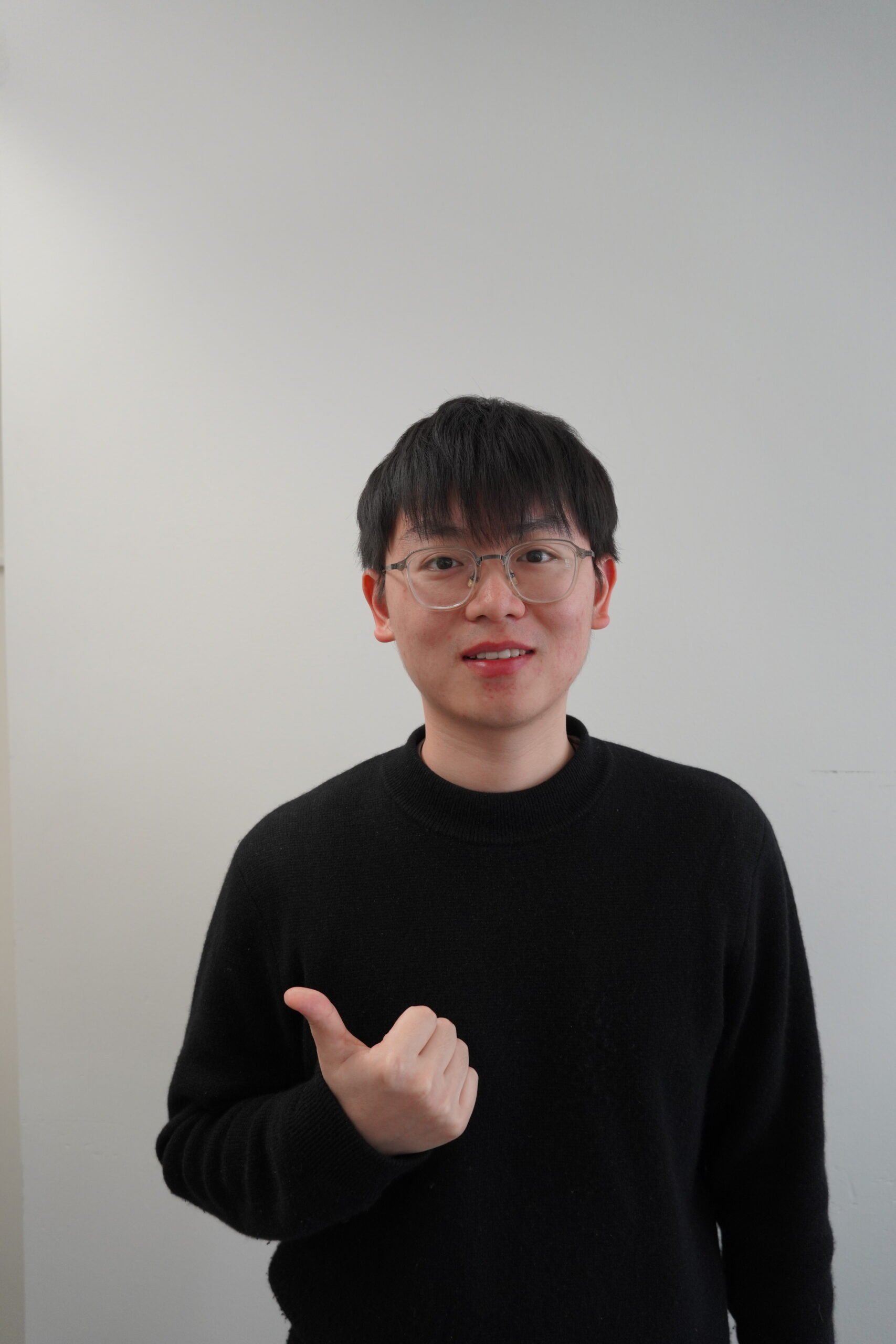
Zhengxing Zhu
DC04
PhD Candidate at TUM – Technical University of Munich