
From an early age, I saw climate change as the defining challenge of our generation, one that demands action to preserve our planet for future generations. Growing up in a Western industrialized country, I felt a deep sense of responsibility to contribute to solutions. This led me to pursue engineering, with a focus on developing renewable energy to replace conventional systems.
Initially, I envisioned my future in industry, drawn to the idea of working on tangible projects and immersing myself in corporate culture. But my perspective shifted during a double Master’s program at KTH (Stockholm) and IST (Lisbon). Traveling across Europe opened my eyes to the shared yet distinct energy challenges each country faces. In Scandinavia, hydropower dominates, allowing a focus on industrial transformation and system optimization. In Portugal, the vast wind resources along its Atlantic coast present both opportunities and technical hurdles for offshore wind. The interconnected European electricity grid offers a unique chance for countries to share flexibility and mutual benefits, reinforcing the need for a holistic approach beyond a single industry.
My Master’s thesis at WavEC Offshore Renewables in Lisbon solidified my passion for research. Working on preventive maintenance for offshore wind farms, I discovered a passion for the autonomy and depth of research. Every challenge became an opportunity for deep investigation, broadening my understanding of renewable energy development. It was clear: research was where I could grow the most.
My academic and professional journey has taken me through five European countries, from Scandinavia to the Iberian Peninsula. Engaging with diverse cultures, languages, and perspectives has been invaluable, especially as we tackle global ecological and geopolitical challenges. Cooperation and international collaboration are essential.
This is why I joined the TWEED consortium. It offered the perfect blend of my interests: researching wind energy, exploring new methods like machine learning and model updating, and collaborating across Europe. At the Norwegian University of Science and Technology, I’m developing lifetime-conscious curtailment strategies. These strategies aim to help wind farm operators provide flexibility to the power grid while preserving the structural integrity of their turbines. In doing so, my work contributes to a more sustainable energy future for Europe, both by extending the lifespan of wind turbines and aligning their output with demand.
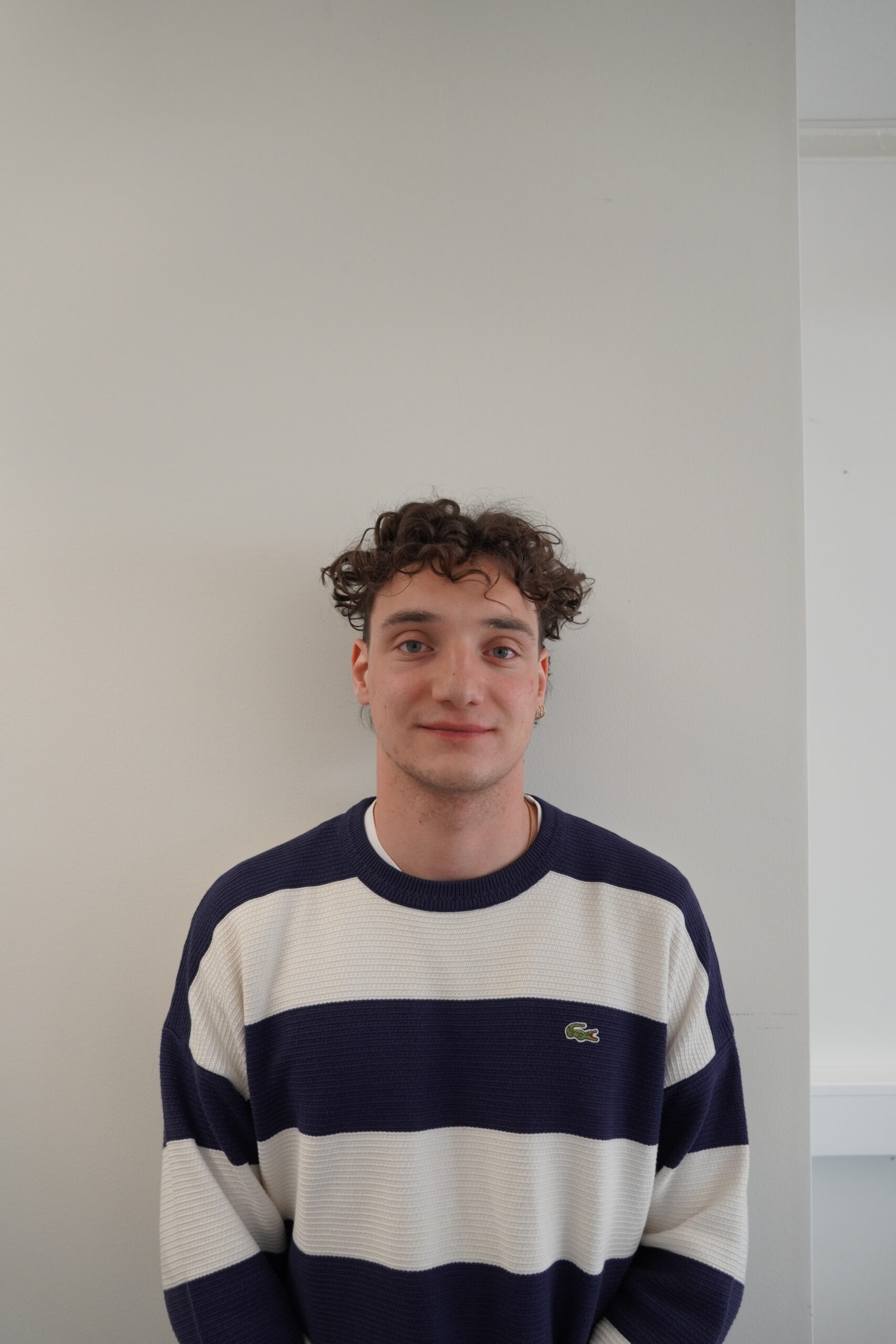
Paul Dupin
DC07
PhD candidate at NTNU | MSc in Energy Engineering from KTH (Stockholm) and IST (Lisbon) | Wind Energy | Structural Analysis