
My journey into the wind energy sector was not a straight line, but rather a convergence of diverse surroundings and disciplines. Growing up in Southwest China, I developed an early appreciation for the natural world. This perspective stayed with me as I moved into the rigorous world of engineering.
From Engineering Foundations to Global Reflection
My academic path began at Tsinghua University, where I received a world-class education in Mechanical and Power Engineering. This period was crucial; it built the analytical discipline and technical foundation that underpin everything I do today. Later, during a joint programme at École Polytechnique in France, I was exposed to the vast technical breadth of renewable energy—from hydro, wind and solar to geothermal and wave power.
But the true “moment of clarity” arrived unexpectedly during the global pandemic. As human activity ground to a halt, we witnessed a paradox: while our advanced civilisation felt fragile in the face of nature, the planet’s ecosystems began to heal with startling speed. This period of stillness taught me a vital lesson—our technological prowess must not be an instrument of dominance over nature, but a bridge to harmony with it.
It was this reflection that guided me back at Tsinghua to deeper research on energy and climate change, and eventually to Denmark—a country where wind energy is a primary pillar of the national power grid, consistently providing over half of the electricity supply.
The Research: Solving the Computational Dilemma
Now, as part of the TWEED project, I am focused on the “brain” of wind farm design: Layout Optimisation. As we transition to massive offshore clusters, the stakes for “where” we place each turbine have never been higher. My research addresses the “computational-accuracy” bottleneck. Currently, developers must choose between:
High-fidelity CFD models: Extremely accurate but too slow for large-scale optimisation.
Low-fidelity analytical models: Fast but often ignoring complex wake interactions, leading to “model uncertainty” and financial risk.
My work introduces an AI-augmented framework. By using advanced machine learning techniques, I am developing surrogate models that maintain the precision of solutions while significantly reducing computational costs. This allows us to combine the physical rigour of high-fidelity simulations while achieving the processing speed of AI. Together with my colleagues from TWEED, we aim to achieve the broader goal of reducing the Levelised Cost of Energy (LCOE) for a truly sustainable future.
Collaboration: The Heart of TWEED
Research of this scale is never a solitary endeavour. My work is deeply integrated into the TWEED network, a collaborative environment that bridges the gap between academia and industry.
I am particularly grateful for the guidance of my supervisors, Ju Feng and Pierre-Elouan M. Réthoré, whose expertise in wind farm layout optimisation and wake models has been instrumental in shaping my research direction. My industrial secondment at EDF(UK) will offer me an opportunity to better understand the real-world costs of wind farms from a unique view, while Simon Watson will lead our collaboration on wind resource assessment during my academic secondment.
Beyond formal supervision, the exchange of ideas with my fellow TWEED PhD students provides a unique multidisciplinary perspective. Whether we are discussing our research progress or sharing the experience of PhD life, this community embodies the spirit of the Marie Skłodowska-Curie Actions: breaking silos to solve global challenges.
Ultimately, my aim is to ensure that the what I do serves the preservation of our physical world—ensuring that environments everywhere remain vibrant for the generations to follow. As Marie Skłodowska-Curie once said, “There is always the chance that a scientific discovery may become like the radium a benefit for humanity.”
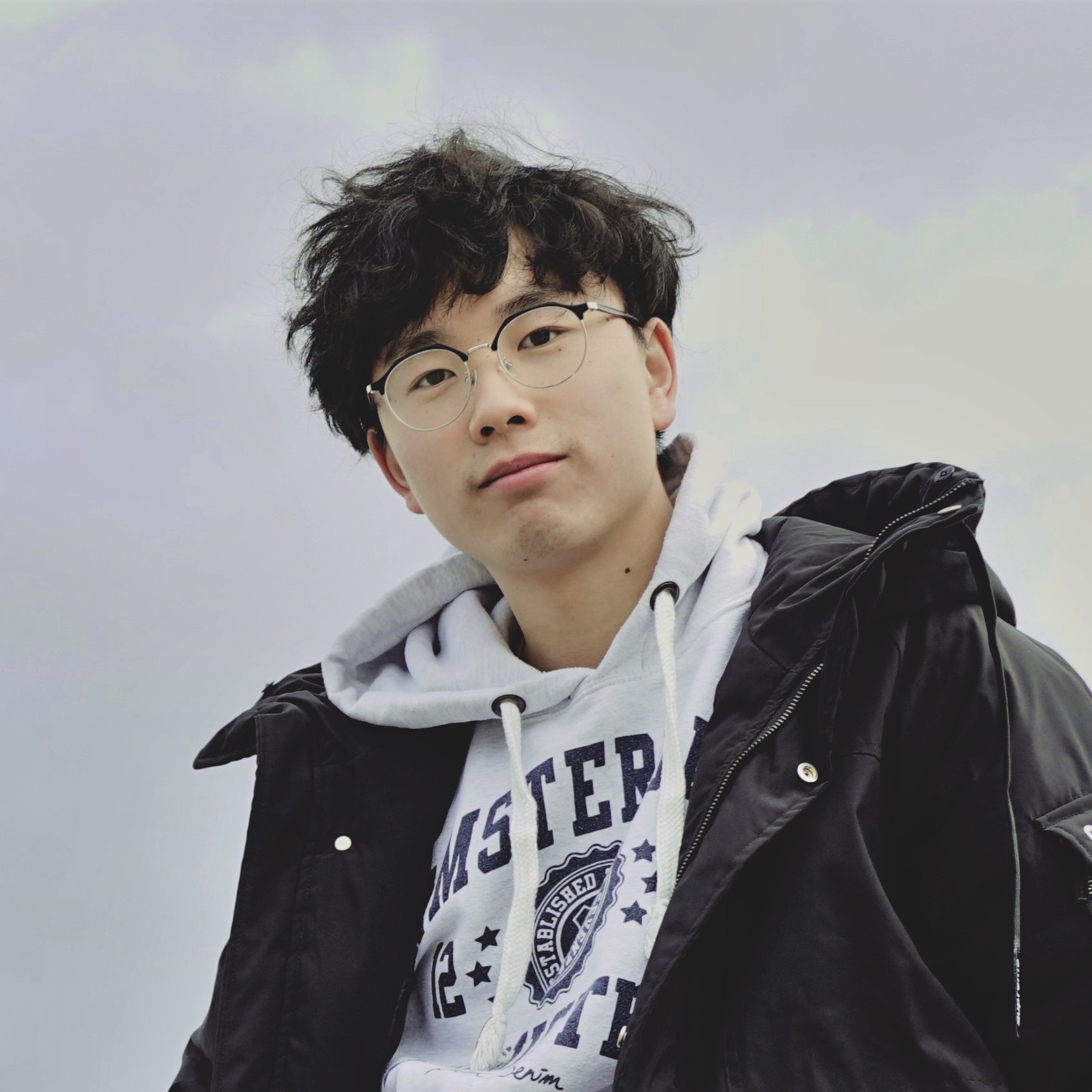
Rongxin Wang
Doctoral Candidate 1
PhD student at DTU | MSc in Tsinghua and École Polytechinque | Wind Energy
- System Engineering and Optimization
- Wind Energy Systems Division
This article is part of the “TWEED Researcher Stories” series, highlighting the doctoral researchers shaping the digital future of wind energy within the Marie Skłodowska-Curie Doctoral Network TWEED